Cultural guide Lopburi old town
A city older than Bangkok by a thousand years.
Five sites · three civilisations · 1,400 years

Lopburi, a primer.From Dvaravati monks to Khmer kings to Ayutthaya cosmopolitans.

Lopburi is one of the oldest continuously inhabited cities in Thailand. It was a Mon-Dvaravati outpost in the 7th century, a Khmer provincial capital in the 11th, and the second royal capital of Ayutthaya in the 17th. Every layer is still standing, often in the same temple compound. Here's what each site is, why it matters, and what to look for when you visit.

Dvaravati · Khmer · Ayutthaya 5 sites covered All photos: Wikimedia
First, the city itself

i.How Lopburi got here.

Lopburi (Lavo in older texts) was founded according to chronicle in 648 CE during the Dvaravati period, when Mon Buddhists ruled central Thailand. Marco Polo even mentioned it as "Locach" in his 13th century travels.

In the 11th century the Khmer Empire under Suryavarman I absorbed Lopburi as a provincial seat, building temples in the Bayon style you'll see all over town. When the Khmer faded and Ayutthaya rose in the 14th century, Lopburi remained important. King Narai the Great (1656–1688) made it the kingdom's second capital and lived here eight months a year, hosting French, Persian and Portuguese ambassadors.

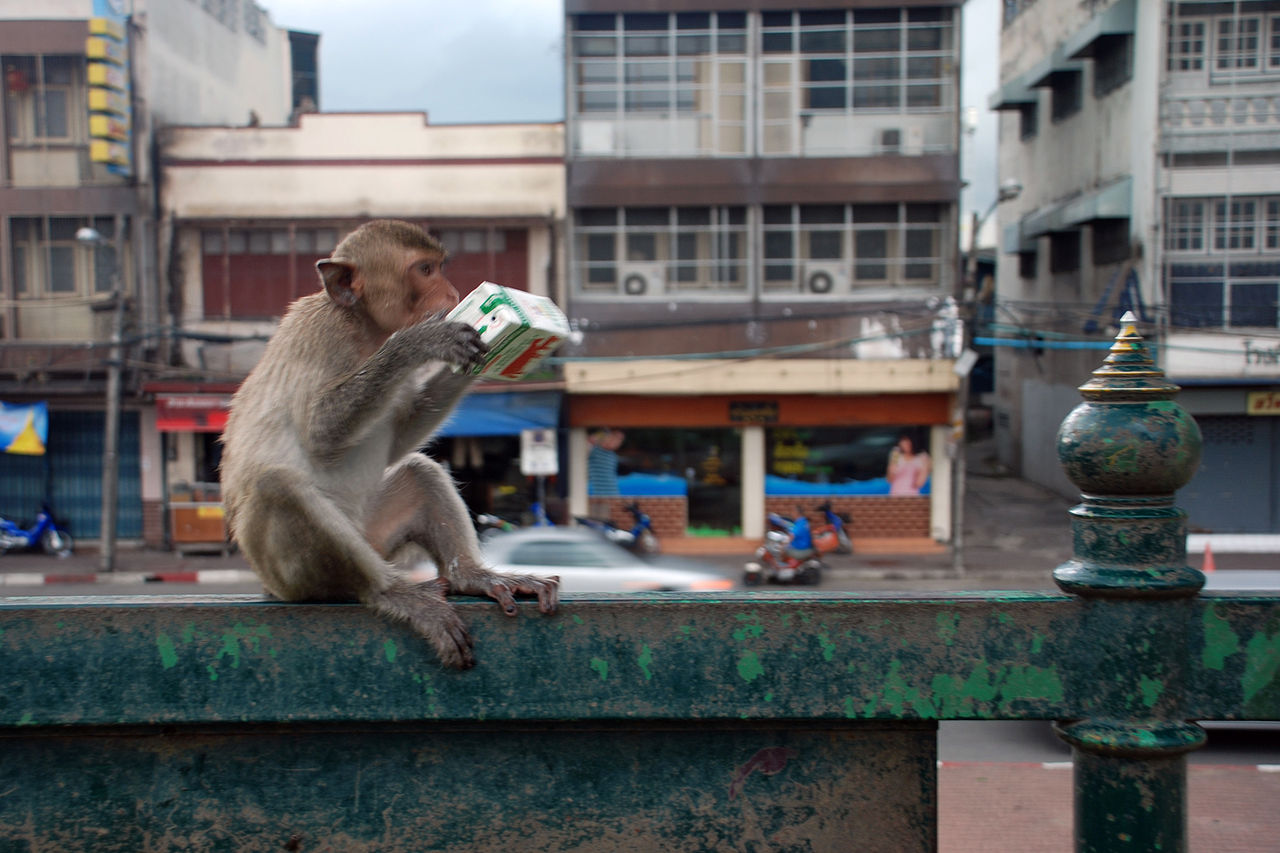
After Narai's death the city was abandoned and the jungle returned. The macaques, who had always lived around San Phra Kan and Phra Prang Sam Yot, took over the empty stones. They've been there ever since.

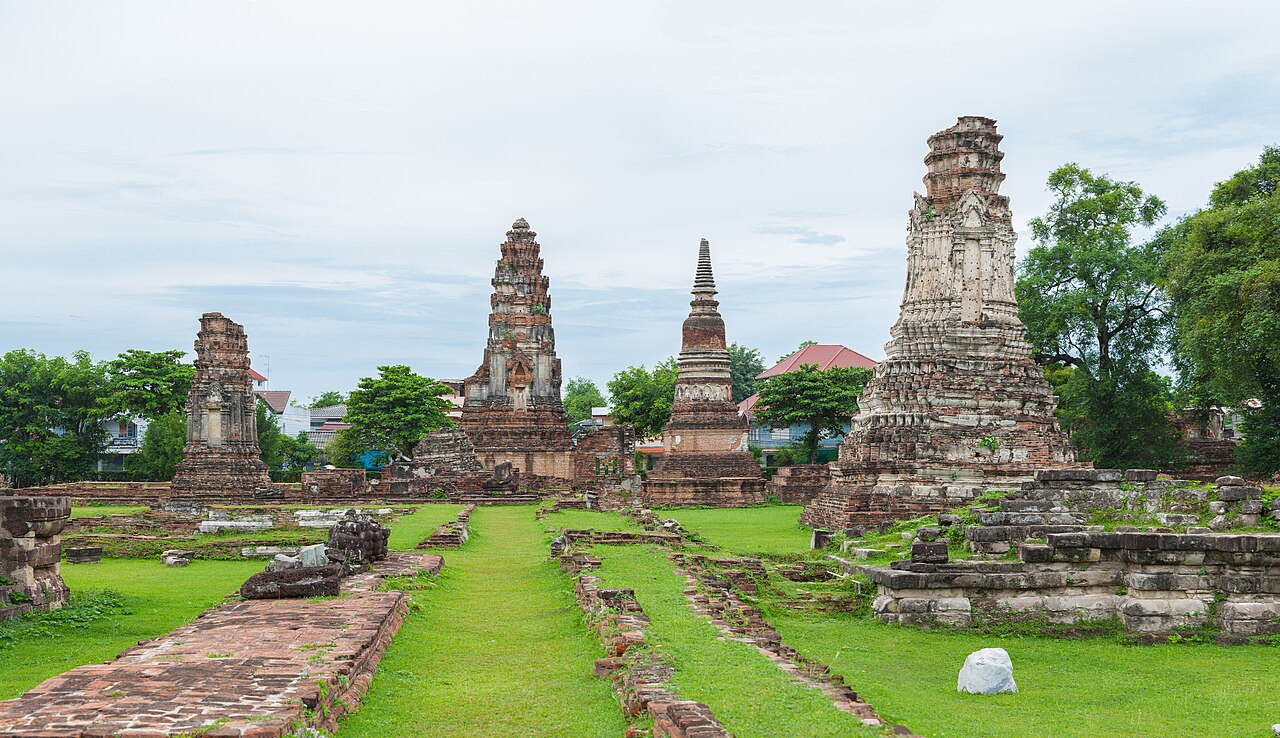
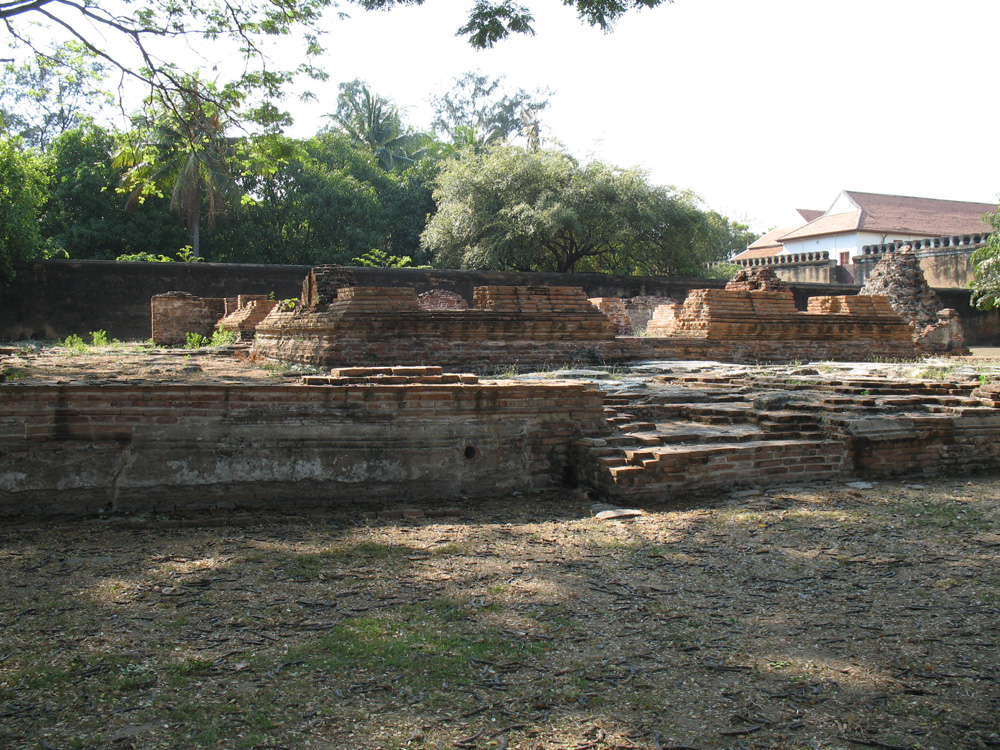
Wat Phra Sri Rattana Maha That ruins panorama Wikimedia Commons

Wat Phra Sri Rattana Maha That

วัดพระศรีรัตนมหาธาตุ ลพบุรี
12th–13th century Khmer + Lavo 50฿ or combo 07:00 – 17:00

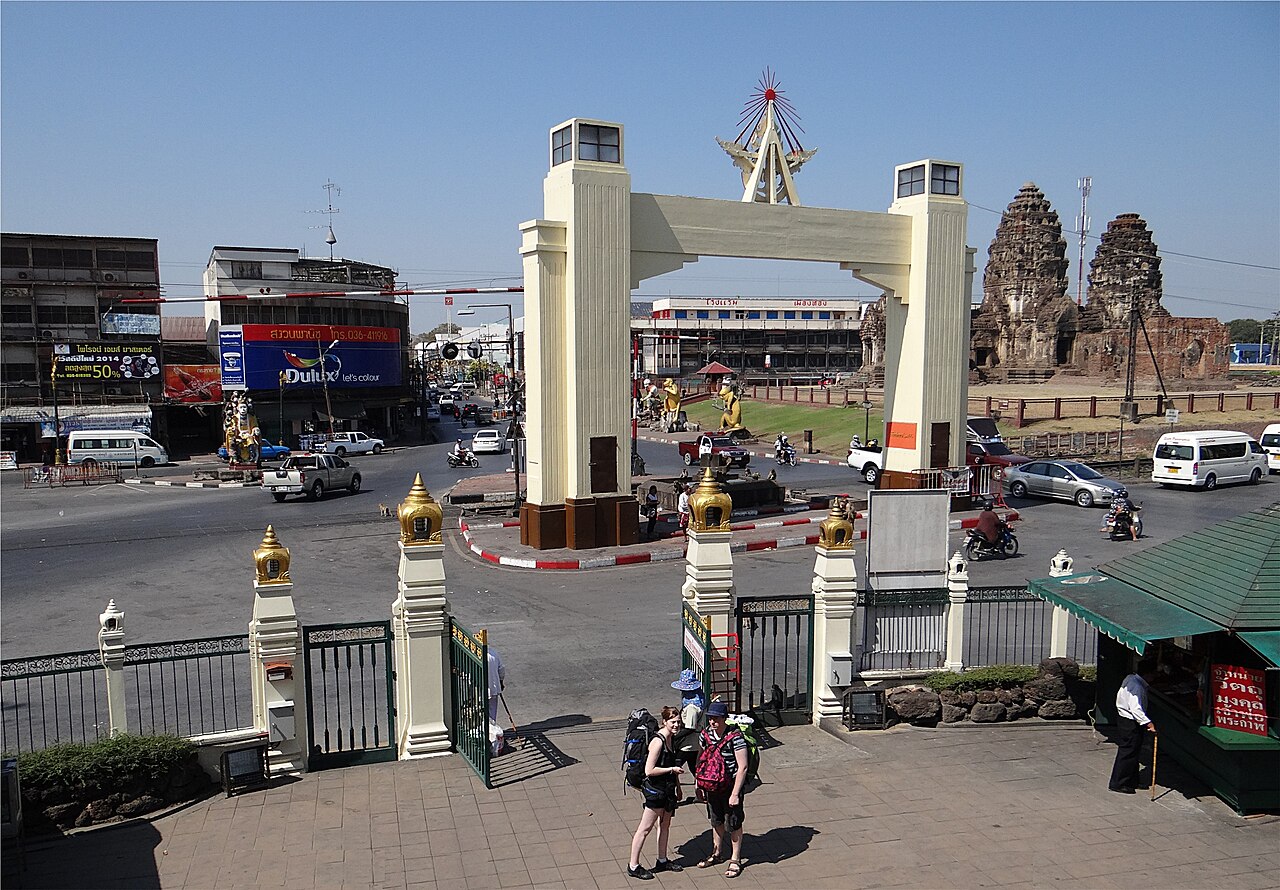
The biggest temple complex in Lopburi, sitting directly across the road from the railway station. The grounds measure 200m east-to-west and 180m north-to-south, with a walled inner sanctum.

The central prang is laterite and mortar, almost 30 metres tall, and the gable still shows traces of Lavo art reflecting Mahayana Buddhist beliefs. King Narai used this temple for state religious ceremonies in the 17th century, but its core is several hundred years older. The complex shows three architectural languages stacked on top of each other: Khmer, Lavo, and late Ayutthaya.

What to look for

  • The central prang's "corn cob" silhouette, classic Khmer Bayon style
  • The headless Buddha statues lining the courtyard, beheadings done by 18th century Burmese armies looting bronze
  • The mondop (square reliquary) on the north side, a later Ayutthaya addition with European-influenced arches
  • The viharn ruins behind the prang, where you can still see column bases marking out the original prayer hall
"Wat Maha That" means "temple of the Great Relic" — every old Thai capital had one, this is Lopburi's.
Open in Maps ↗
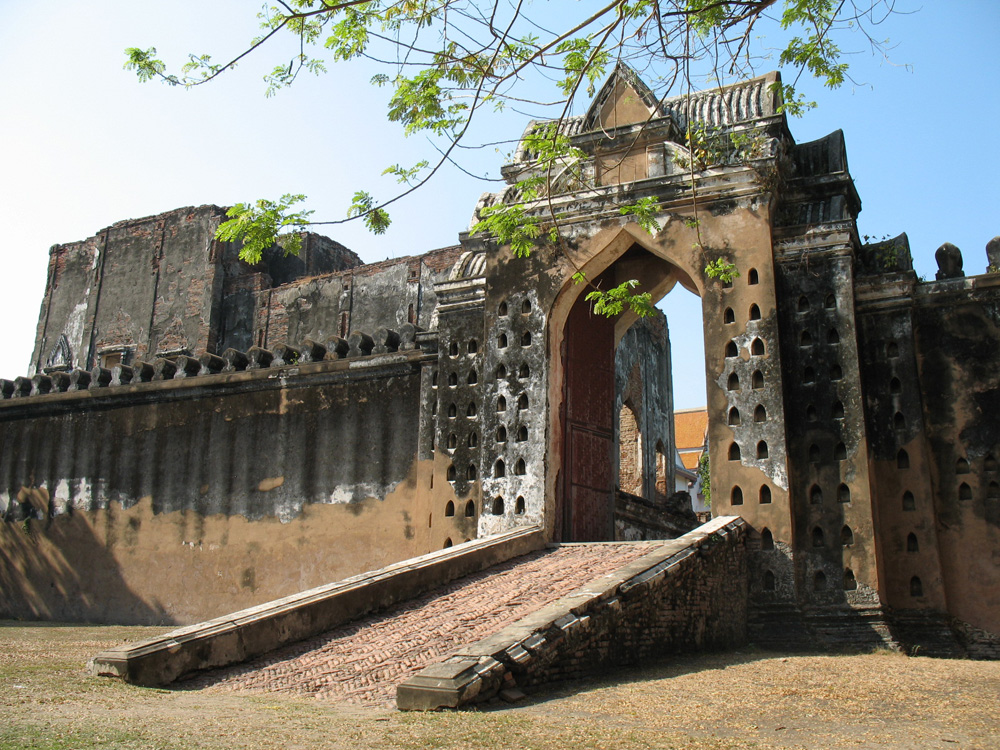
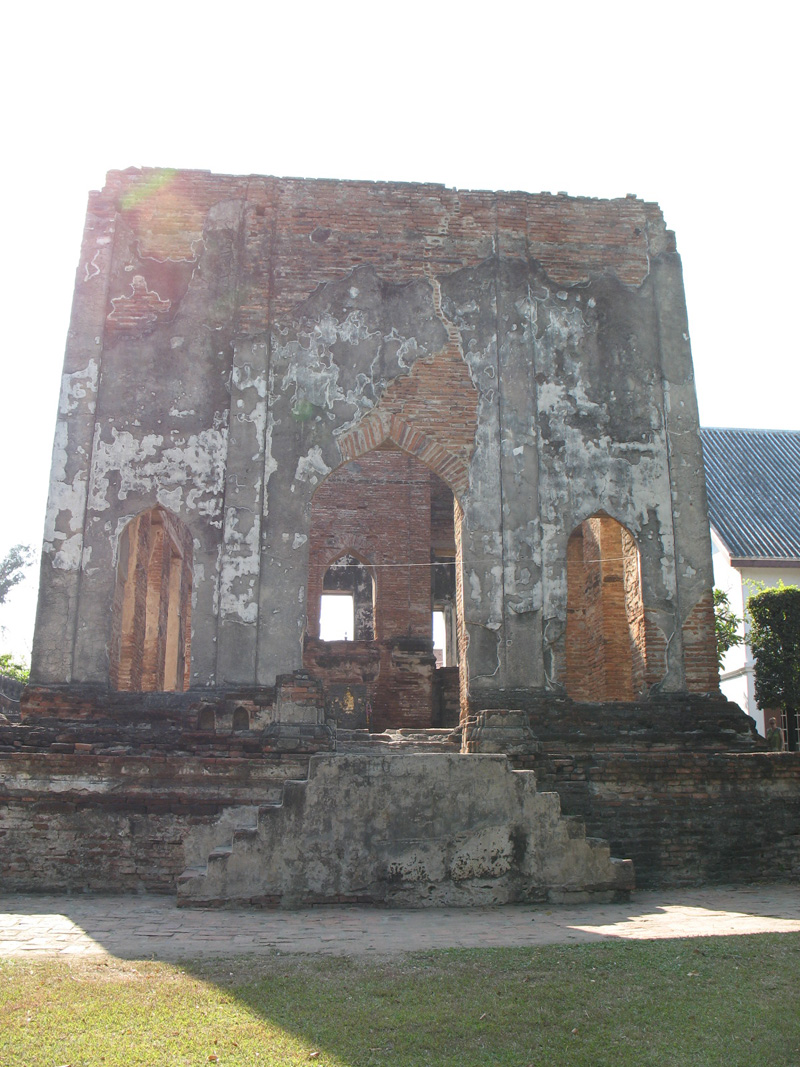
King Narai's Palace Inner Gate Wikimedia Commons

King Narai's Palace

พระนารายณ์ราชนิเวศน์ · Phra Narai Ratchaniwet
Built 1666 Ayutthaya royal 150฿ museum Wed–Sun · 09:00–16:00

The cosmopolitan heart of 17th century Thailand. King Narai the Great commissioned the palace in 1666 over the foundations of an older 14th century palace, on a 16-acre plot, to serve as his second residence. He spent eight to nine months a year here, hunting, doing astronomy, receiving foreign diplomats. When he died in 1688 the palace was abandoned and stayed empty for 170 years until King Mongkut restored it in the 1850s.

What makes Narai's reign legendary is the international court he ran. Persian, French, Dutch, and Portuguese envoys all stayed in this compound. The architecture reflects that exchange: Thai bases with European-style pointed arches and Persian-influenced water pavilions.

What to look for

  • Dusit Sawan Hall — the audience hall where Narai received Louis XIV's ambassadors in 1685, with its layered Thai roof and curiously European arched windows
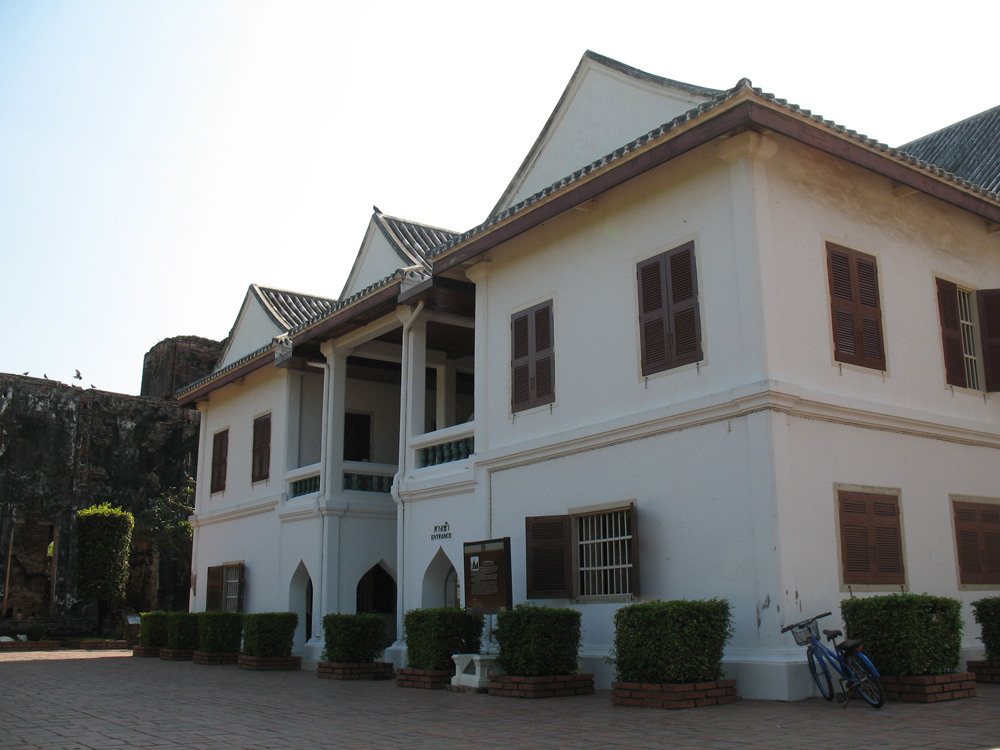
  • Chantara Phisan Hall — the centre of the palace, now houses the Somdet Phra Narai National Museum (1,864 artefacts spanning 1,400 years)
  • The water reservoirs and piped water system — the Eulogy of King Narai (1680) specifically praises this engineering, water was piped to the palace from a reservoir kilometres away
  • The Twelve Royal Storage warehouses — twelve identical brick rooms in a row, used to store Persian rugs, French clocks, ambassadorial gifts
  • Phiman Mongkut Pavilion — added by King Mongkut in 1856 during restoration, served as Lopburi City Hall under King Chulalongkorn
Stand in the audience hall and remember: in 1685 a French Jesuit knelt here speaking to a king who'd never seen snow.
Open in Maps ↗
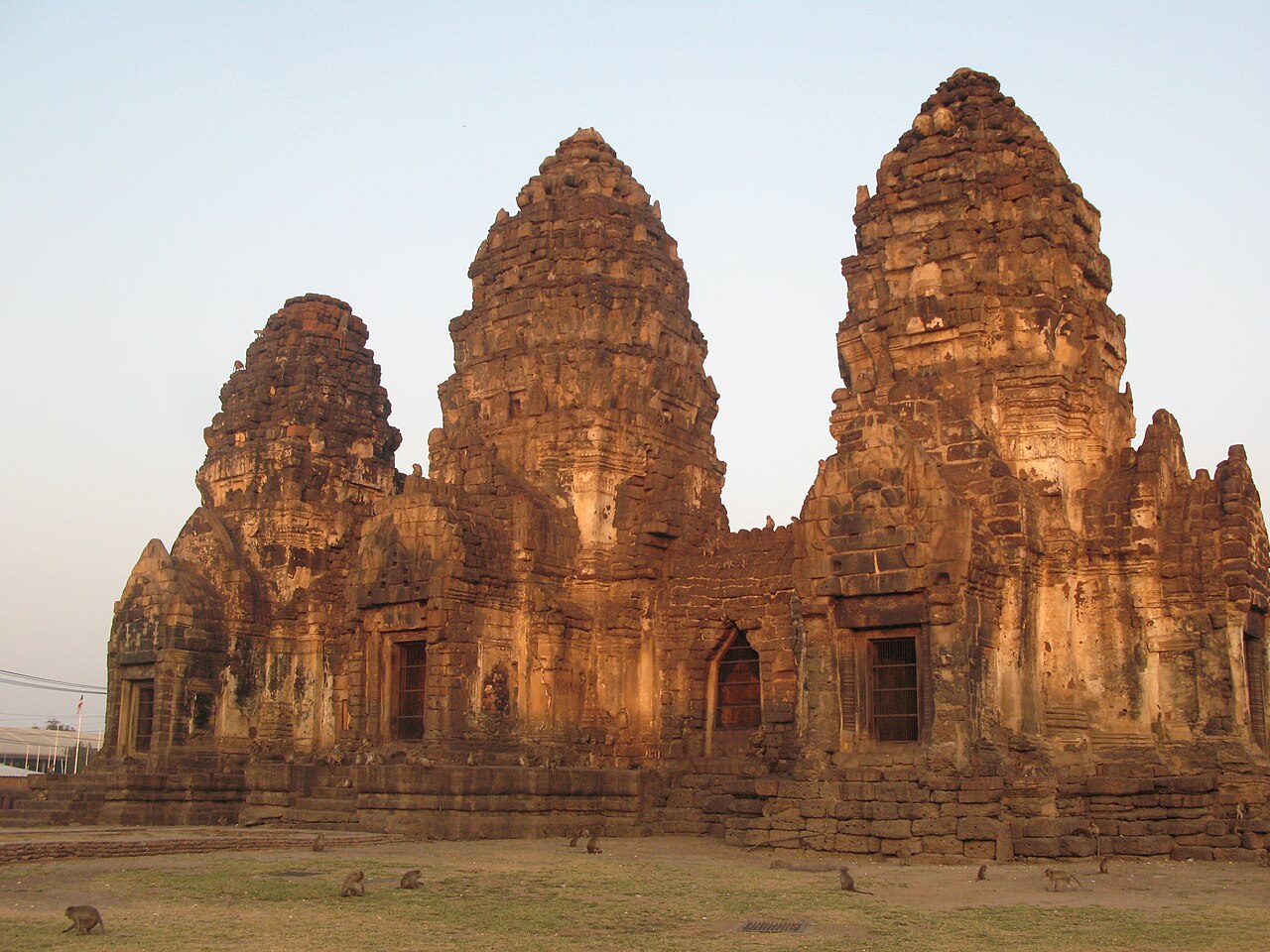
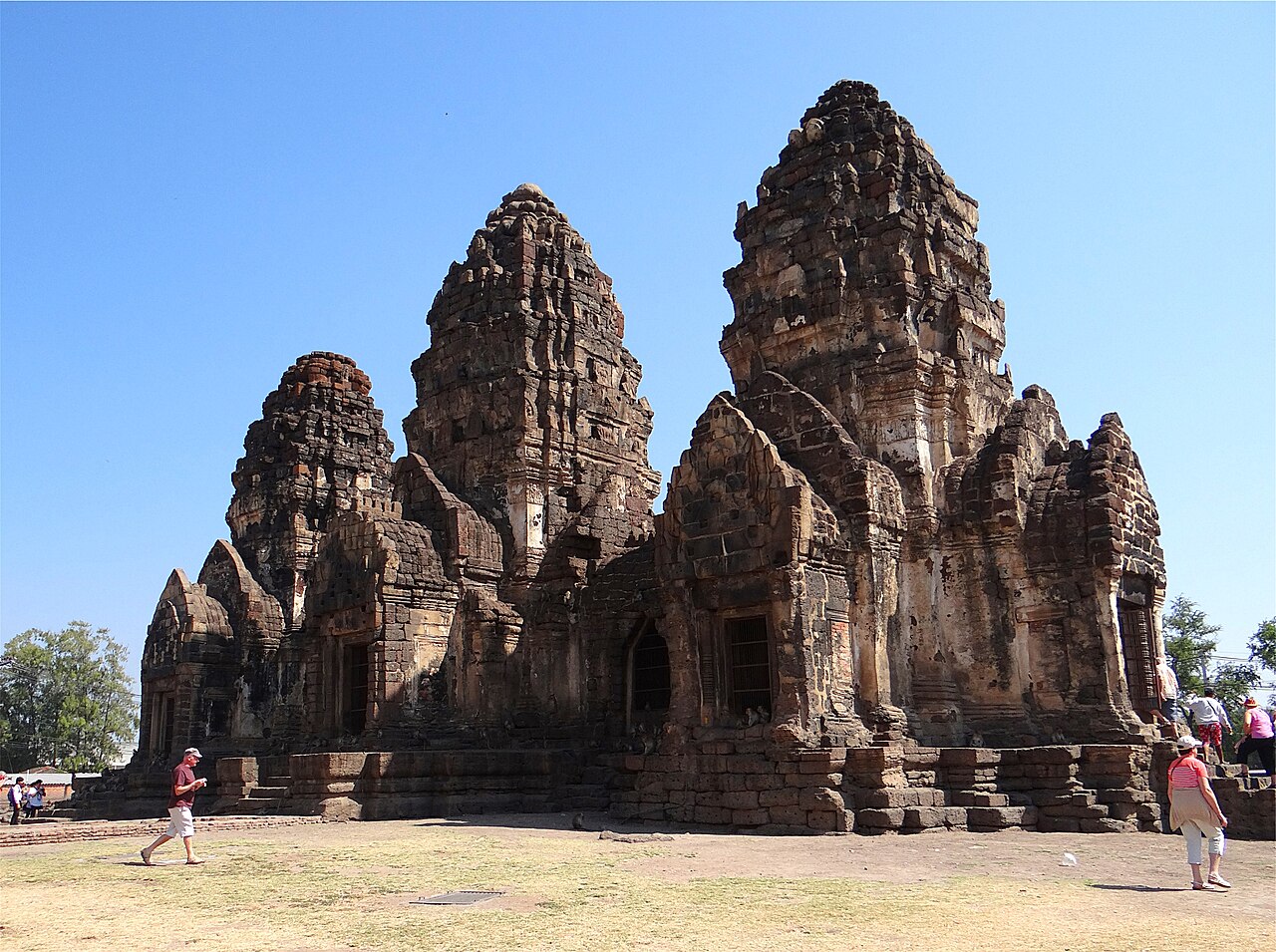
Phra Prang Sam Yot Wikimedia Commons

Phra Prang Sam Yot

พระปรางค์สามยอด · "the three peaked prang"
Circa 1200 CE Khmer / Bayon 50฿ or combo 08:30 – 18:00

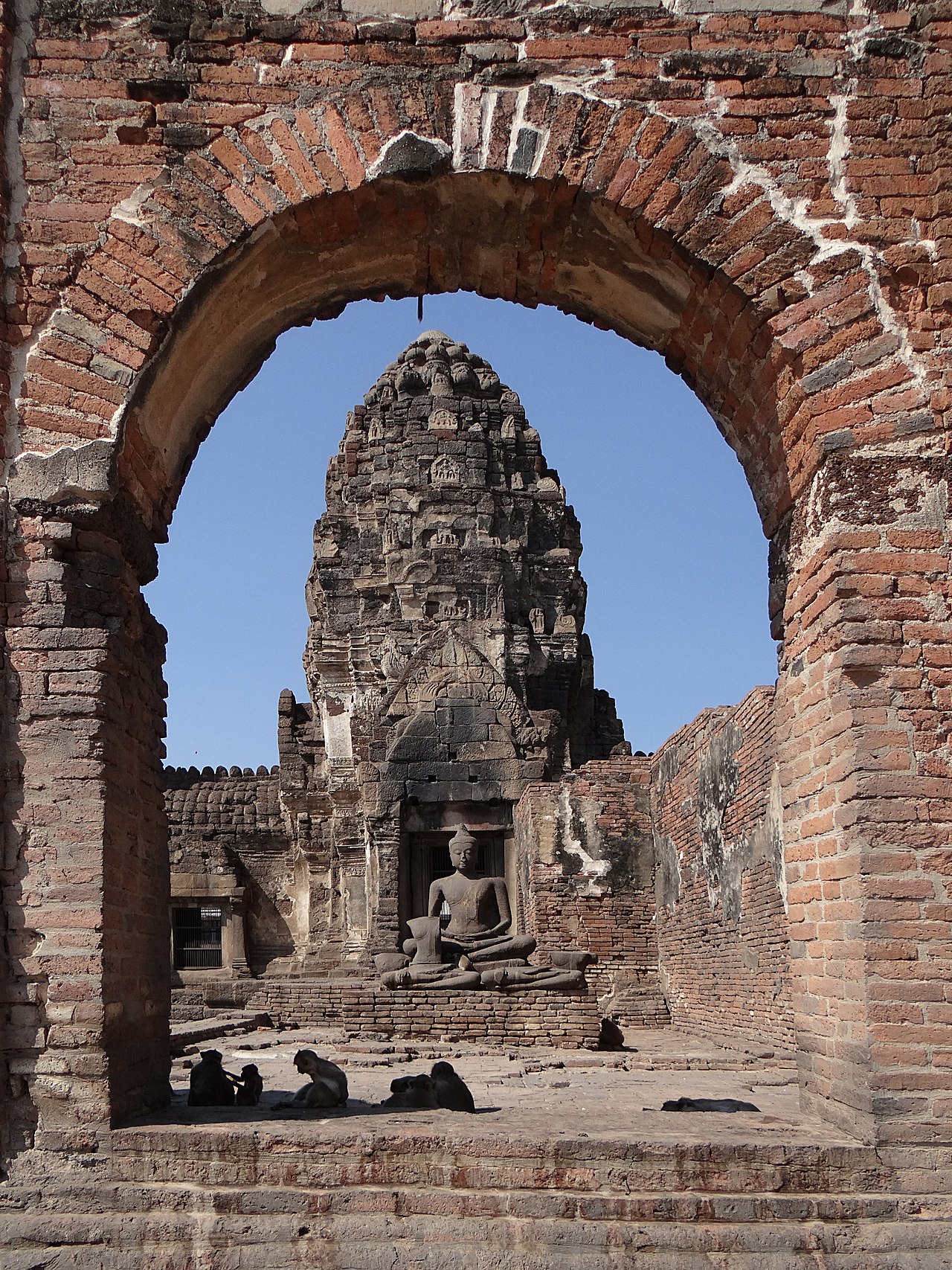
The icon of Lopburi. Three laterite towers connected by a covered passage, built around the year 1200 by King Jayavarman VII of the Khmer Empire (the same king who built Angkor Thom and the Bayon). It was originally Mahayana Buddhist, not Hindu, despite the trinity look. Each tower honoured a specific deity:

  • North tower: Prajnaparamita, the goddess of perfected wisdom
  • Central tower: the Buddha himself
  • South tower: Avalokiteśvara, the bodhisattva of compassion

The temple was Jayavarman's way of marking Lopburi as Khmer territory and inserting himself into the local royal cult. When Theravada Buddhism replaced Mahayana in the 14th century, the towers were rededicated and a prayer hall was added during King Narai's reign in the 1680s.

The monkeys

The crab-eating macaques (Macaca fascicularis) have lived around these stones for centuries, but the population exploded after Lopburi launched the annual Monkey Buffet Festival in 1989, where 4,000 kg of fruit is laid out for them. Local belief says they are disciples of Jao Paw Phra Kan, the spirit who protects the city. They are not captive, not fed for tourist photos, not part of any show.

What to look for

  • The stucco carvings on the lintels, faces of dancing apsaras still visible in the central tower
  • The east-facing entrance, every Khmer temple opens east to the sunrise
  • The Mon-Dvaravati architectural traces beneath the Khmer overlay, a hint that something stood here even earlier
  • The seated Buddha in the prayer hall added by Narai, an Ayutthaya layer on a Khmer base
Same architect, same century as Angkor Thom. You're standing in a Khmer royal temple a thousand kilometres from Cambodia.
Open in Maps ↗
San Phra Kan
11th century · Khmer laterite

San Phra Kan Shrine

ศาลพระกาฬ · "the shrine of Phra Kan"
11th century base Khmer + Ayutthaya Free ~5 min walk from Sam Yot

One of the oldest structures in Lopburi. The base is a mound of laterite blocks dating to the 11th century Khmer period, when the site was a Theravada Buddhist temple. Stone tablets in Pallava and Khmer script have been recovered here.

During King Narai's reign in the 17th century a brick shrine in Thai-Persian-Western style was built on top of the laterite base. Inside is a reclining Vishnu image and a black stone deity that locals named Chao Pho Phra Kan, the city's protector spirit. The macaques are believed to be his disciples, which is why no one shoos them away.

What to look for

  • The contrast between the rough 11th century laterite base and the smoother 17th century stucco shrine on top — two religions, six hundred years apart, on the same foundation
  • The reclining Vishnu inside (Hindu) sitting next to Buddhist offerings (Theravada) in 2026
  • The 1951 reconstruction commissioned by then prime minister Plaek Phibunsongkhram, identifiable by its cleaner mortar lines
Open in Maps ↗
Wat Nakhon Kosa
7th–17th century · three civilisations stacked

Wat Nakhon Kosa

วัดนครโกษา
7th–17th century Dvaravati + Khmer + Ayutthaya Free, 24h North of station

The sleeper hit of Lopburi. Three civilisations rubbing shoulders in one ruined compound, a few minutes' walk from the station and almost always empty.

The oldest monument is a Mon-Dvaravati chedi from the first millennium CE, possibly as early as the 7th century. There are very few extant Dvaravati monuments anywhere in Thailand, which makes this one quietly important. Then comes a small Khmer-era prang from the 11th–13th centuries, when the area sat under the suzerainty of the Khmer Empire. Finally, a 16th–17th century Ayutthaya viharn was added during King Narai's restoration push.

What to look for

  • The Mon-Dvaravati chedi, identifiable by its bell shape with a square base, oldest thing standing in the city
  • Stucco fragments on the Khmer prang, weathered down to almost nothing but still readable as a divinity in profile
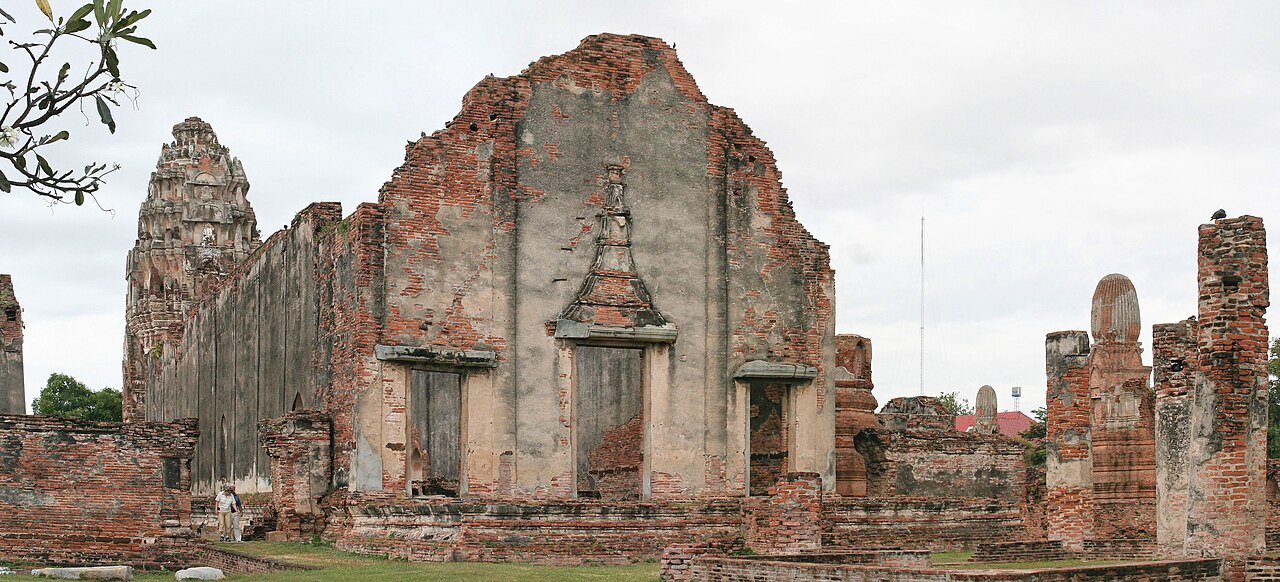
  • The viharn's red brick walls, classic Ayutthaya, missing their original wooden roof
  • The fact that no one is here — bring a coffee, sit on a low wall, watch the swallows
Three centuries apart, three different empires, same patch of grass.
Open in Maps ↗
Ready

Back to the day plan

Hour-by-hour schedule, train times, bike rental, restaurant shortlist, monkey survival rules, and the custom map.

Open the plan ←